.svg)

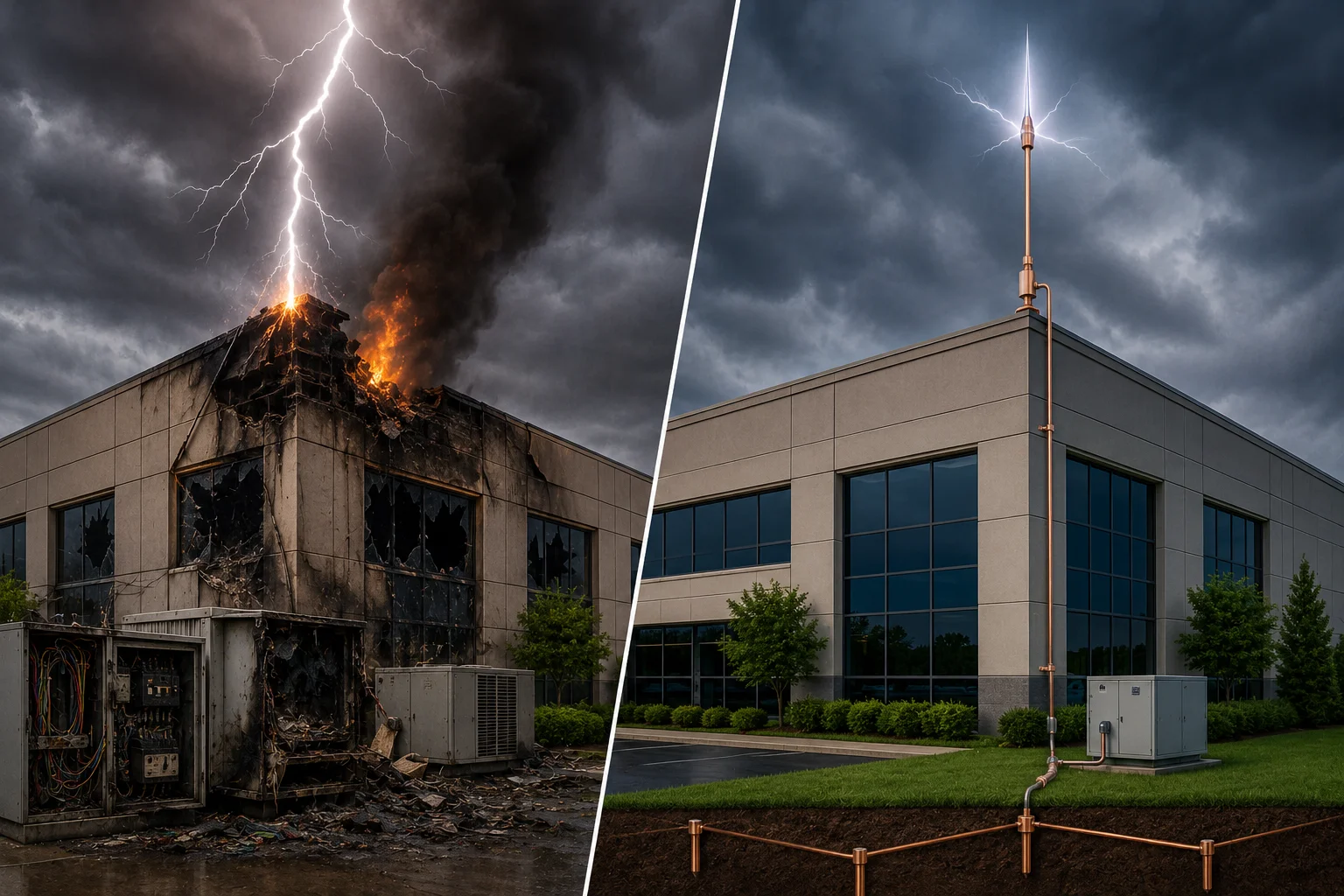
Lightning strikes can cause significant financial losses for businesses. From structural damage and equipment failure to operational downtime and safety risks, the cost of lightning damage can quickly exceed expectations. Many business owners do not consider lightning protection until after an incident occurs. However, investing in commercial lightning protection systems before damage happens is often the most cost-effective decision.
Understanding the true cost of lightning damage compared to the cost of installing protection systems helps business owners make informed decisions about safeguarding their facilities, employees, and assets.
Lightning damage can affect nearly every part of a commercial operation. Even a single strike can disrupt operations and create unexpected expenses.
Common costs associated with lightning damage include:
For businesses that rely on continuous operations, even a short disruption can lead to lost revenue and customer dissatisfaction.
Modern commercial facilities depend on sensitive electrical equipment and digital systems. Lightning can generate powerful electrical surges that damage these systems instantly.
Equipment commonly affected includes:
Replacing or repairing this equipment can be costly, especially for industries that rely on specialized machinery.
Operational downtime is one of the most overlooked costs of lightning damage. When equipment fails or safety systems are compromised, businesses may need to suspend operations until repairs are completed.
Downtime can result in:
In industries such as manufacturing, logistics, healthcare, and energy, downtime can lead to significant financial losses.
Lightning can ignite fires by generating intense heat or causing electrical sparks. Fires in commercial buildings can spread quickly and create serious safety hazards for employees and customers.
Fire-related costs may include:
Preventing fires is one of the primary benefits of installing commercial lightning protection systems.
Compared to the potential cost of damage, installing a lightning protection system is a relatively small investment. These systems are designed to intercept lightning strikes and safely direct electrical energy into the ground.
A commercial lightning protection system typically includes:
The installation cost varies depending on building size, risk level, and system complexity, but it is often far less than the cost of repairing lightning damage.
Businesses that invest in lightning protection systems often experience long-term financial benefits. These systems help reduce risk and improve operational reliability.
Long-term savings may include:
Protecting assets before damage occurs helps businesses maintain stability and avoid unexpected expenses.
While all businesses can benefit from lightning protection, certain industries face higher risks due to the nature of their operations.
High-risk industries include:
These industries often rely on continuous operations and sensitive equipment, making protection essential.
Some facilities have a higher risk of lightning-related damage. Identifying risk factors early can help prevent costly incidents.
Your business may need lightning protection if:
A professional risk assessment can help determine the appropriate level of protection.
Lightning strikes can happen without warning, but the damage they cause can often be prevented. Installing commercial lightning protection systems is one of the most effective ways to protect property, equipment, and operations.
Businesses that invest in protection benefit from:
Taking proactive steps today can help prevent costly disruptions in the future.