.svg)

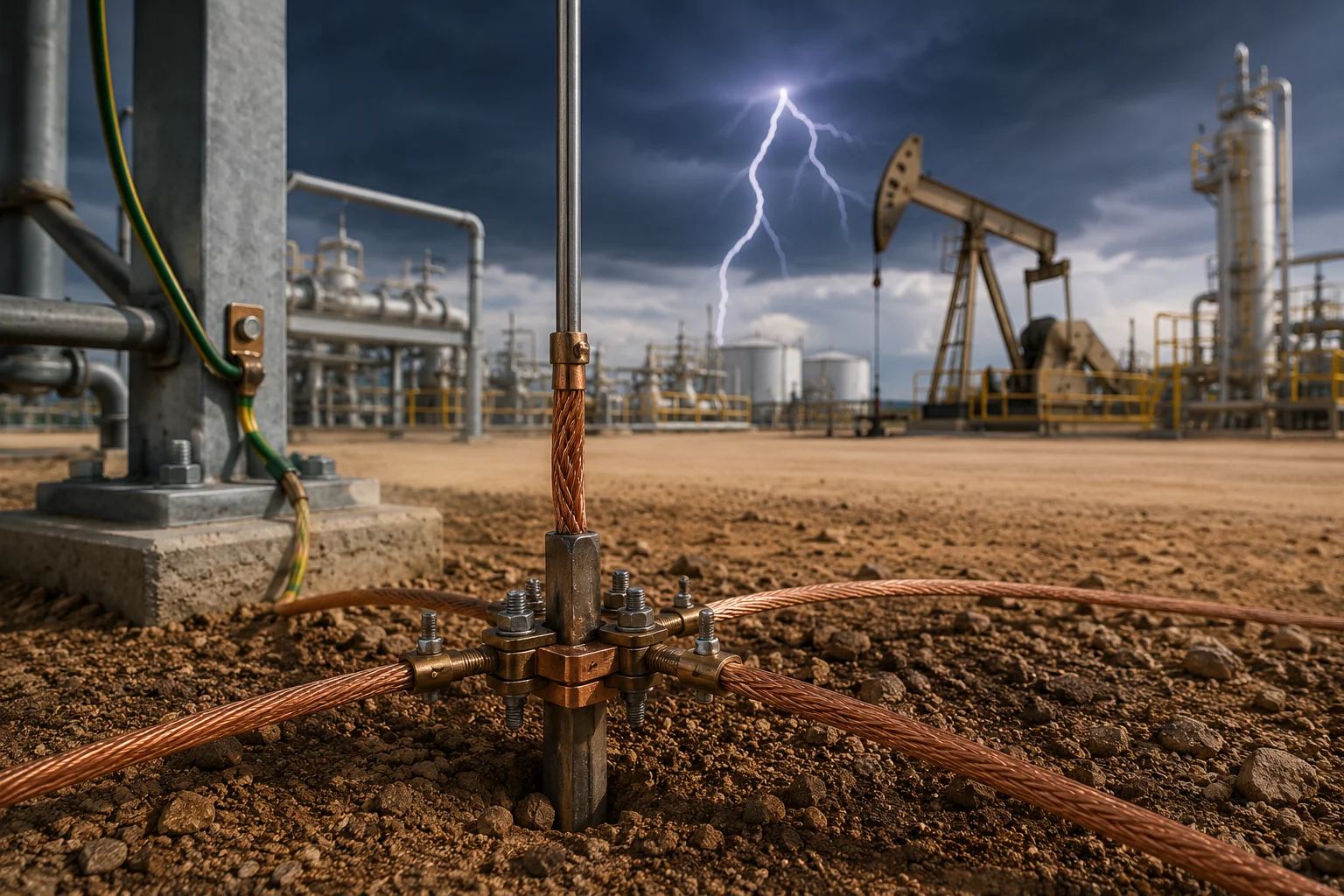
Grounding systems are one of the most critical components of lightning protection in oil and gas facilities. In environments where flammable materials, pressurized equipment, and sensitive electronics are present, proper grounding helps safely dissipate electrical energy and prevent dangerous incidents. Without an effective grounding system, lightning strikes can create sparks, electrical surges, equipment damage, and even explosions.
Understanding the role of grounding systems in oil and gas lightning protection helps facility managers and operators maintain safe, compliant, and reliable operations in high-risk environments.
A grounding system is designed to provide a safe path for electrical energy to travel into the earth. When lightning strikes a structure or piece of equipment, the grounding system helps control the flow of electricity and safely disperse it into the ground.
In oil and gas facilities, grounding systems are engineered to handle high electrical loads and protect both equipment and personnel. These systems are essential for preventing electrical buildup and minimizing the risk of ignition in hazardous environments.
Key components of a grounding system include:
Together, these components create a controlled pathway for electrical energy, reducing the risk of lightning-related incidents.
Oil and gas operations involve equipment that handles flammable liquids and gases. Even a small spark caused by uncontrolled electrical energy can lead to severe consequences. Grounding systems help prevent these risks by stabilizing electrical potential and directing energy safely away from equipment.
Grounding systems are essential because they:
In high-risk industrial environments, grounding is not optional—it is a fundamental safety requirement.
When lightning strikes an oilfield structure, the electrical energy must be safely controlled. A properly installed grounding system absorbs and disperses that energy into the earth.
The process typically works as follows:
This controlled process prevents energy from traveling unpredictably through equipment or structures.
Grounding systems protect a wide range of critical infrastructure in oil and gas operations. These systems help ensure equipment remains functional and safe during lightning events.
Common equipment protected by grounding systems includes:
Protecting this equipment helps reduce downtime and maintain operational continuity.
Bonding is closely related to grounding and plays a vital role in preventing electrical hazards. Bonding connects metal components together to ensure they share the same electrical potential.
Without proper bonding, differences in electrical potential can create sparks between components. In oil and gas environments, these sparks can ignite flammable vapors.
Bonding helps:
Grounding and bonding systems work together to create a complete lightning protection solution.
Oil and gas facilities must meet strict safety and operational standards. Proper grounding systems help operators comply with regulatory requirements and industry guidelines.
Common standards and practices include:
Compliance not only protects workers but also reduces liability and operational risk.
Grounding systems can degrade over time due to corrosion, soil conditions, and environmental exposure. Regular inspections help identify potential issues before they become serious safety hazards.
Warning signs include:
Routine maintenance ensures the system continues to perform effectively.
Professional installation ensures grounding systems are properly designed, installed, and tested for optimal performance. Experienced technicians understand the unique challenges of oil and gas environments and follow proven safety procedures.
Benefits of professional grounding system installation include:
Investing in professional installation helps protect both assets and personnel.
Grounding systems are a critical part of any lightning protection strategy in oil and gas operations. By safely controlling electrical energy and preventing sparks, these systems help protect workers, equipment, and infrastructure from lightning-related hazards.
Proactive planning and routine maintenance can significantly reduce risk and ensure safe operations in demanding environments.
Keep your oilfield operations safer, compliant, and prepared for severe weather with professional grounding system installation and maintenance services.